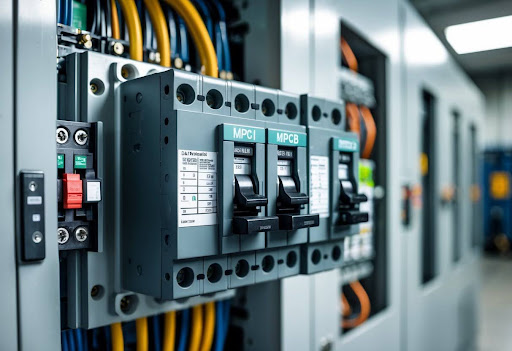
A Motor Protection Circuit Breaker (MPCB) is an electrical device designed specifically to protect electric motors from damage caused by overloads, short circuits, and phase failures. It ensures the motor operates safely by detecting faults and disconnecting power when needed, which helps prevent costly motor damage and downtime. This protection is crucial because motors often face harsh electrical conditions that can reduce their lifespan or halt operations.
MPCBs are essential in many industrial and commercial settings where motors drive equipment like compressors, pumps, and conveyors. Unlike regular circuit breakers, MPCBs also protect against issues like phase loss and imbalance, which can severely harm three-phase motors. Their ability to handle the high starting current of motors while providing adjustable protection makes them a vital part of motor management.
Because electric motors are expensive and critical to many systems, the right MPCB choice improves safety and reliability. Selecting the proper breaker based on motor specifications and application needs ensures optimal performance and prevents unnecessary trips or failures.
Motor Protection Circuit Breaker (MPCB) Overview
The motor protection circuit breaker (MPCB) is designed to protect electric motors from damage caused by electrical faults. It combines several protective functions in one device and operates differently from standard circuit breakers to meet the specific needs of motors.
Definition and Core Purpose
An MPCB is a specialized circuit breaker made to protect electric motors from overloads, short circuits, and phase faults. Its core purpose is to ensure the motor runs safely without electrical damage.
The device monitors current flow and detects issues like phase loss or imbalance, which can harm three-phase motors. By disconnecting power when a problem arises, the MPCB prevents overheating and motor failure. It is typically used in industrial and commercial systems where motors drive pumps, fans, compressors, or conveyor belts.
Key Functions of MPCB
MPCBs provide several key protections in one unit:
- Overload Protection: It stops the motor when current exceeds safe levels for too long.
- Short Circuit Protection: It quickly trips when sudden, very high currents occur due to faults.
- Phase Loss and Unbalance Detection: It disconnects the motor if one phase is missing or imbalanced by more than 2%, avoiding damage.
- Thermal Delay: This feature prevents the motor from restarting immediately after a trip, allowing it to cool.
Some MPCBs also offer manual motor control and fault signaling through LED indicators. Certain models allow automatic restart after a preset cooldown period.
Differences Between MPCB and Standard Circuit Breakers
Unlike regular circuit breakers, MPCBs are tailored for motor protection with unique features.
Standard circuit breakers mainly protect against overload and short circuits but lack phase monitoring. MPCBs detect phase loss and voltage imbalance, which are critical risks for motors.
MPCBs have adjustable settings to match the motor’s current rating and handle high inrush currents at motor startup without tripping unnecessarily. Standard breakers often trip too early on these startup currents.
MPCBs also integrate manual switching for motor operation, combining protection and control in one device. This makes them more suitable for motor applications than general-purpose circuit breakers.
How Motor Protection Circuit Breakers Work
Motor protection circuit breakers (MPCBs) protect motors by detecting electrical faults and disconnecting power when needed. They combine thermal and magnetic protections, monitor phase conditions, and allow both manual and automatic control. These features help prevent damage from overload, short circuits, and phase problems.
Thermal Protection Mechanism
Thermal protection shields the motor against overload by responding to excessive current over time. Inside the MPCB, a bimetallic strip heats up when high load current flows. As it heats, the strip bends and triggers the trip mechanism to open the contacts.
This process includes a thermal delay to avoid tripping during normal inrush currents at motor startup, which can be 5 to 8 times the rated current. The delay ensures the motor starts properly without false trips.
If the motor runs overloaded too long, the strip heats enough to trip the breaker. This prevents motor winding overheating and damage. This is called the thermal overcurrent release and acts slowly to match dangerous heat buildup.
Magnetic Protection Mechanism
Magnetic protection reacts instantly to high current faults like short circuits. It uses an electromagnet coil inside the MPCB that energizes when current spikes suddenly.
The strong magnetic field pulls a plunger armature, releasing the switch latch rapidly to open the motor circuit. This interrupts dangerous current flow immediately.
Magnetic protection trips at current levels much higher than normal load, typically over 10 times the rated current, to avoid tripping on the startup surge. This is known as the electromagnetic overcurrent release.
An important part of this mechanism is the arcing chamber which safely extinguishes electrical arcs when contacts open. This prevents contact damage and improves breaker life.
Phase Loss and Imbalance Detection
Three-phase motors require balanced voltage across all phases to operate correctly. MPCBs monitor voltage and current differences between phases to detect phase loss or phase imbalance.
If one phase voltage or current drops significantly or disappears, the MPCB senses the unbalance. It trips the breaker immediately to stop the motor from running under damaging conditions.
Phase loss can cause motor overheating and winding burnouts because the motor tries to run on fewer phases. Imbalance above 2% typically triggers protective action.
The MPCB measures current differences and disconnects the motor before serious damage occurs. This protects the motor’s service life and keeps the system safe.
Manual and Automatic Operation
MPCBs feature a main contact system with manual and automatic control options. Operators can disconnect the motor manually using buttons or switches for maintenance or emergency shutdown.
Some models allow automatic reconnection after a preset cool down period following an overload trip. This helps restart the motor without manual intervention if the issue was temporary.
The switch uses a switch latch to hold contacts closed during operation and opens them when any protection trips.
Additional indicators like an LED display provide visual fault signals to alert personnel that the breaker has operated.
This combination of manual control and automatic restart enhances both safety and convenience for motor management.
Types of Motor Protection Circuit Breakers
Motor Protection Circuit Breakers (MPCBs) come in several key types that provide different methods of protecting motors from electrical faults. These types vary by their sensing and tripping mechanisms, level of adjustability, and ease of use. Choosing the right type depends on motor size, application, and required precision in protection.
Thermal-Magnetic MPCBs
Thermal-magnetic MPCBs combine two protection methods in one device. The thermal part uses a bimetallic strip that bends when the motor current exceeds its rated limit for a certain time. This bending trips the breaker to protect against long-term overload.
The magnetic part reacts instantly to short circuits by using an electromagnet to trip the circuit quickly. This dual mechanism is effective for most motors and offers reliable protection against both slow and fast electrical faults.
These MPCBs often replace traditional overload relays and standard MCBs. They are widely used because they provide motor-specific protection in one compact unit. Thermal-magnetic MPCBs suit many industrial applications where simple overload and short circuit protection is needed.
Electronic MPCBs
Electronic MPCBs use microprocessors and electronic sensors to monitor motor current and other parameters more precisely. They can detect overloads, short circuits, phase failure, and phase imbalance with higher accuracy than thermal-magnetic types.
These devices allow adjustable settings for overload trip values and timing, offering tailored protection based on the motor’s characteristics. Some models provide communication features for integration into motor control systems.
Electronic MPCBs are preferred in systems needing sensitive, flexible, and repeatable protection. They also reduce wear by avoiding unnecessary tripping, improving motor reliability and operational life.
Manual Motor Starters
Manual motor starters provide motor protection combined with the ability to switch the motor ON and OFF manually. These devices typically include a thermal overload relay built-in or attached and use a simple mechanism to trip the motor when overloaded.
Unlike MPCBs, manual starters do not always offer instantaneous short circuit protection and often require a separate MCCB for full safeguarding. However, they are easy to use and maintain.
Manual motor starters are common in smaller motor applications or where direct motor control with basic overload protection is sufficient. They often serve as cost-effective solutions in less complex electrical setups.
Selection and Application of MPCBs
Choosing the right Motor Protection Circuit Breaker (MPCB) involves matching the breaker’s capacity to the motor’s demands and the operating environment. Proper coordination with devices like contactors and motor starters is essential for reliable motor control and safety.
Sizing and Rating Considerations
Selecting an MPCB begins with understanding the motor’s rated current and starting current. The breaker’s adjustable current setting should cover at least 1.2 times the motor’s rated current to account for startup inrush.
The breaking capacity (Icu) must exceed the maximum possible short-circuit current at the installation point to safely interrupt faults. A breaker with insufficient breaking capacity risks equipment damage.
Overload protection is based on thermal tripping, matching the motor’s operating curve to avoid false trips during normal starts. Some MPCBs include undervoltage releases to protect against voltage drops that could stall the motor.
Key Application Areas
MPCBs are used in a variety of electric motor applications, from conveyors and fans to pumps and precision machines.
- Basic protection suits motors with mainly overload and short-circuit risks, such as fans.
- Motors prone to phase loss or locked rotor faults, like compressors, require MPCBs with advanced monitoring.
- High-end MPCBs with electronic protection and ground fault detection are necessary for sensitive motors like servos.
Properly selecting the MPCB type for the motor’s application improves operational efficiency and reduces downtime.
Coordination with Contactors and Motor Starters
MPCBs often work alongside contactors and motor starters to form a complete motor control system.
The MPCB handles protection by interrupting faults quickly, while contactors switch power to the motor during normal operation. Auxiliary contacts on MPCBs provide feedback signals for control circuits.
Combining MPCBs with starters and contactors simplifies wiring, reduces panel space, and improves motor feeder management. It also allows phased protection, where the MPCB protects against overload and short circuits, and the starter manages soft starts or other control features.
Premium electrical and automation equipment
When it comes to electrical and automation equipment, quality is essential. Premium products provide enhanced safety, reliability, and performance. They help prevent hazards that can arise from using lower-quality devices.
Key Features of Premium Equipment:
- Safety Standards: Premium equipment often meets or exceeds international safety standards, ensuring it operates safely and efficiently.
- Durability: Quality materials and robust construction lead to longer lifespans, reducing the need for frequent replacements.
- Performance: High-end devices generally offer better efficiency, which can lead to lower energy costs and improved output.
Investing in premium equipment can significantly reduce risks. For instance, safety features are built-in to prevent electrical faults. Additionally, reputable brands provide proper certifications and guidelines, assuring users of their safety.
Examples of Premium Equipment Providers:
- Gabby Electric: Known for its extensive range of electrical products, Gabby Electric emphasizes quality and safety. Their offerings include automation solutions designed for various industries.
Benefits of Choosing Premium Brands:
- Peace of mind knowing safety is prioritized.
- Better support and warranty options.
- Access to the latest technology and innovations.
Purchasing premium electrical and automation equipment can enhance safety and performance while minimizing the risks associated with lower-quality products.