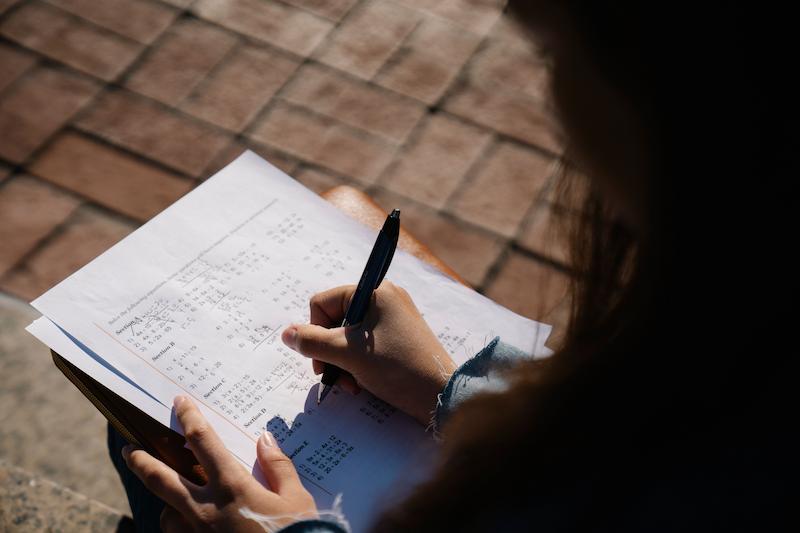
If you are preparing for the UGC NET examination, practising ugc net paper 1 mcqs can help you revise essential concepts, test your understanding and identify topics that require more attention. Paper 1 covers teaching and research aptitude, comprehension, communication, reasoning, ICT, environmental studies and higher education.
The examination includes 50 questions worth 100 marks. Each correct answer carries two marks, and there is no negative marking under the standard examination scheme. Regular practice can help you become familiar with numerical problems, logical arguments and concept-based questions.
This article provides practice questions across all 10 syllabus units, with four options and the correct answer for each question. Use them to assess your preparation alongside the official syllabus and previous-year question papers.
UGC NET Paper 1 Exam Pattern
| Exam detail | Information |
| Paper | General Paper on Teaching and Research Aptitude |
| Total questions | 50 |
| Total marks | 100 |
| Marks per correct answer | 2 |
| Negative marking | No |
| Exam mode | Computer-based test |
Important UGC NET Paper 1 MCQs with Answers
Unit 1: Teaching Aptitude MCQs
Q1. What is the primary objective of teaching?
A. Completing the syllabus quickly
B. Developing knowledge, understanding and skills
C. Maintaining classroom silence
D. Giving homework every day
Answer: B. Developing knowledge, understanding and skills
Q2. Which level of teaching mainly focuses on memorisation and recall?
A. Reflective level
B. Understanding level
C. Memory level
D. Creative level
Answer: C. Memory level
Q3. Which teaching method encourages active student participation?
A. Dictation
B. One-way lecture only
C. Group discussion
D. Repeated copying
Answer: C. Group discussion
Q4. What is the main purpose of formative assessment?
A. Ranking students at the end of the year
B. Monitoring learning and providing feedback
C. Replacing classroom teaching
D. Selecting students for admission
Answer: B. Monitoring learning and providing feedback
Q5. Which is an example of summative assessment?
A. A short classroom discussion
B. Informal feedback during a lesson
C. A final examination
D. A practice question during teaching
Answer: C. A final examination
Q6. What should primarily guide the selection of a teaching method?
A. Classroom decoration
B. Teacher’s preferred style alone
C. Learning objectives and students’ needs
D. The length of the textbook
Answer: C. Learning objectives and students’ needs
Q7. Diagnostic assessment is used to:
A. Identify learning difficulties
B. Award final grades only
C. Compare institutions
D. Determine teacher salaries
Answer: A. Identify learning difficulties
Q8. Which activity is most learner-centred?
A. Copying notes throughout the class
B. Listening without asking questions
C. Investigating a problem and presenting findings
D. Memorising a chapter without discussion
Answer: C. Investigating a problem and presenting findings
Q9. Which teaching aid is most suitable for showing geographical locations?
A. Calculator
B. Map
C. Dictionary
D. Stopwatch
Answer: B. Map
Q10. What is the teacher’s main role in a learner-centred classroom?
A. Providing every answer directly
B. Discouraging questions
C. Facilitating learning and guiding students
D. Limiting student participation
Answer: C. Facilitating learning and guiding students
Unit 2: Research Aptitude MCQs
Q11. What is a primary objective of research?
A. Repeating information without examination
B. Generating knowledge and examining existing findings
C. Avoiding questions
D. Confirming every assumption
Answer: B. Generating knowledge and examining existing findings
Q12. Research conducted to solve a practical problem is called:
A. Historical research
B. Pure research
C. Applied research
D. Philosophical speculation
Answer: C. Applied research
Q13. A teacher studies ways to improve students’ classroom participation. This is an example of:
A. Action research
B. Archaeological research
C. Pure mathematics
D. Literary criticism
Answer: A. Action research
Q14. What is a research hypothesis?
A. A final result that cannot be changed
B. A tentative statement that can be tested
C. A list of references
D. A summary of completed research
Answer: B. A tentative statement that can be tested
Q15. Which sampling method gives every member of a population an equal chance of selection?
A. Convenience sampling
B. Purposive sampling
C. Simple random sampling
D. Snowball sampling
Answer: C. Simple random sampling
Q16. Which research approach mainly uses numerical data and statistical analysis?
A. Quantitative research
B. Narrative description only
C. Literary interpretation
D. Ethnographic observation only
Answer: A. Quantitative research
Q17. What does plagiarism mean?
A. Collecting original data
B. Citing a source correctly
C. Using another person’s work without proper acknowledgement
D. Reviewing research methods
Answer: C. Using another person’s work without proper acknowledgement
Q18. Which is an example of primary data?
A. A published textbook
B. A review article
C. Responses collected directly through a survey
D. An existing government report
Answer: C. Responses collected directly through a survey
Q19. What is the main purpose of a literature review?
A. To avoid reading earlier research
B. To examine existing studies on a topic
C. To replace data collection in every study
D. To present only personal opinions
Answer: B. To examine existing studies on a topic
Q20. Which practice supports ethical research?
A. Changing results to match expectations
B. Hiding relevant findings
C. Obtaining informed consent when required
D. Copying results from another study
Answer: C. Obtaining informed consent when required
Unit 3: Comprehension MCQs
Read the passage and answer the questions below.
Education is not limited to remembering facts or completing textbooks. It helps individuals develop critical thinking, communicate clearly and make informed decisions. Students learn more effectively when they question ideas, examine evidence and apply knowledge to real situations. Teachers can support this process by encouraging discussion and creating an environment where students feel comfortable expressing their views.
Q21. What is the central idea of the passage?
A. Textbooks should be removed from education
B. Education develops knowledge and practical thinking
C. Students should avoid classroom discussion
D. Memorisation is the only purpose of learning
Answer: B. Education develops knowledge and practical thinking
Q22. According to the passage, students learn more effectively when they:
A. Memorise every sentence
B. Avoid expressing opinions
C. Question ideas and examine evidence
D. Depend entirely on textbooks
Answer: C. Question ideas and examine evidence
Q23. What should teachers do to support effective learning?
A. Discourage questions
B. Create a supportive learning environment
C. Focus only on written tests
D. Prevent students from sharing views
Answer: B. Create a supportive learning environment
Q24. Which ability is specifically mentioned in the passage?
A. Critical thinking
B. Mechanical repair
C. Financial trading
D. Artistic drawing
Answer: A. Critical thinking
Q25. The passage suggests that education should go beyond:
A. Communication
B. Discussion
C. Memorisation
D. Evidence-based thinking
Answer: C. Memorisation
Unit 4: Communication MCQs
Q26. Which elements are commonly included in the communication process?
A. Sender
B. Receiver
C. Feedback
D. All of the above
Answer: D. All of the above
Q27. Gestures, facial expressions and body movements are forms of:
A. Written communication
B. Non-verbal communication
C. Mass communication only
D. Formal reporting
Answer: B. Non-verbal communication
Q28. In communication, feedback refers to:
A. The receiver’s response to a message
B. The sender’s personal background
C. The physical location of a meeting
D. The length of a written document
Answer: A. The receiver’s response to a message
Q29. Which of the following is a psychological barrier to communication?
A. Clear pronunciation
B. Suitable classroom lighting
C. Prejudice or personal bias
D. A well-organised message
Answer: C. Prejudice or personal bias
Q30. Communication between a teacher and students during a lesson is an example of:
A. Classroom communication
B. Intrapersonal communication only
C. Communication without a receiver
D. Mechanical communication
Answer: A. Classroom communication
Q31. Communication that takes place within an individual is called:
A. Interpersonal communication
B. Intrapersonal communication
C. Group communication
D. Mass communication
Answer: B. Intrapersonal communication
Q32. The informal communication network in an organisation is known as:
A. Circular communication
B. Grapevine communication
C. Official reporting
D. Written communication
Answer: B. Grapevine communication
Q33. Which practice supports effective classroom communication?
A. Using unclear instructions
B. Ignoring students’ questions
C. Giving clear explanations and feedback
D. Speaking without considering learners
Answer: C. Giving clear explanations and feedback
Unit 5: Mathematical Reasoning and Aptitude MCQs
Q34. What is 25% of 480?
A. 100
B. 110
C. 120
D. 140
Answer: C. 120
Q35. The ratio of boys to girls in a class is 3:2. If there are 50 students, how many are boys?
A. 20
B. 25
C. 30
D. 35
Answer: C. 30
Q36. Find the average of 12, 18, 24, 30 and 36.
A. 20
B. 22
C. 24
D. 26
Answer: C. 24
Q37. An item costs ₹800 and is sold for ₹1,000. What is the profit percentage?
A. 20%
B. 25%
C. 30%
D. 35%
Answer: B. 25%
Q38. Find the next number in the series: 2, 6, 12, 20, 30, __.
A. 36
B. 40
C. 42
D. 44
Answer: C. 42
Q39. A person completes a job in 10 days. What fraction of the job is completed in one day, assuming a constant work rate?
A. 1/5
B. 1/10
C. 1/15
D. 1/20
Answer: B. 1/10
Q40. Calculate the simple interest on ₹5,000 at 8% per annum for 2 years.
A. ₹600
B. ₹700
C. ₹800
D. ₹900
Answer: C. ₹800
Q41. A vehicle covers 180 kilometres in 3 hours. What is its average speed?
A. 40 km/h
B. 50 km/h
C. 60 km/h
D. 70 km/h
Answer: C. 60 km/h
Unit 6: Logical Reasoning MCQs
Q42. All teachers are educated. Some educated people are researchers. Which conclusion necessarily follows?
A. All teachers are researchers
B. All researchers are teachers
C. Some teachers are researchers
D. None of the above conclusions necessarily follows
Answer: D. None of the above conclusions necessarily follows
Q43. Which item is different from the others?
A. Square
B. Triangle
C. Circle
D. Cube
Answer: D. Cube
Q44. Book is related to reading in the same way that a fork is related to:
A. Writing
B. Eating
C. Drawing
D. Listening
Answer: B. Eating
Q45. Deductive reasoning involves:
A. Drawing general rules from individual observations
B. Applying a general rule to reach a specific conclusion
C. Making decisions without evidence
D. Collecting opinions without analysis
Answer: B. Applying a general rule to reach a specific conclusion
Q46. In Indian logic, which term refers to perception as a source of valid knowledge?
A. Anumana
B. Upamana
C. Pratyaksha
D. Shabda
Answer: C. Pratyaksha
Q47. In Indian logic, inference is known as:
A. Pratyaksha
B. Anumana
C. Upamana
D. Arthapatti
Answer: B. Anumana
Q48. An error in reasoning is commonly called a:
A. Premise
B. Fallacy
C. Proposition
D. Definition
Answer: B. Fallacy
Q49. All roses are flowers, and all flowers are plants. Which conclusion follows?
A. All plants are roses
B. All roses are plants
C. No roses are plants
D. All flowers are roses
Answer: B. All roses are plants
Unit 7: Data Interpretation MCQs
Study the table showing the number of students enrolled in five subjects.
| Subject | Students |
| English | 120 |
| History | 150 |
| Economics | 180 |
| Political Science | 100 |
| Geography | 150 |
| Total | 700 |
Q50. Which subject has the highest enrolment?
A. English
B. History
C. Economics
D. Political Science
Answer: C. Economics
Q51. What is the combined enrolment for History and Geography?
A. 250
B. 280
C. 300
D. 320
Answer: C. 300
Q52. Approximately what percentage of students are enrolled in English?
A. 15.14%
B. 17.14%
C. 18.14%
D. 20.14%
Answer: B. 17.14%
Q53. What is the average enrolment across the five subjects?
A. 120
B. 130
C. 140
D. 150
Answer: C. 140
Q54. What is the ratio of Economics enrolment to Political Science enrolment?
A. 9:5
B. 5:9
C. 8:5
D. 3:2
Answer: A. 9:5
Unit 8: ICT MCQs
Q55. What is the full form of CPU?
A. Central Processing Unit
B. Computer Power Utility
C. Central Program User
D. Control Processing Utility
Answer: A. Central Processing Unit
Q56. Which type of memory is volatile?
A. ROM
B. RAM
C. DVD
D. Hard disk
Answer: B. RAM
Q57. What is the full form of URL?
A. Uniform Resource Locator
B. Universal Record Link
C. Unified Retrieval Language
D. User Resource List
Answer: A. Uniform Resource Locator
Q58. Which protocol is commonly used to secure communication between a browser and a website?
A. FTP
B. HTTP
C. HTTPS
D. SMTP
Answer: C. HTTPS
Q59. Which of the following is an operating system?
A. HTML
B. Google Search
C. Linux
D. Microsoft Excel
Answer: C. Linux
Q60. What is phishing?
A. Compressing computer files
B. Attempting to steal sensitive information through deception
C. Updating an operating system
D. Creating a spreadsheet
Answer: B. Attempting to steal sensitive information through deception
Q61. What is the full form of MOOC?
A. Massive Open Online Course
B. Modern Offline Online Class
C. Multiple Open Operational Computer
D. Managed Online Office Course
Answer: A. Massive Open Online Course
Q62. Which platform provides online courses under India’s SWAYAM initiative?
A. SWAYAM
B. PAN
C. Aadhaar
D. DigiLocker only
Answer: A. SWAYAM
Unit 9: People, Development and Environment MCQs
Q63. Sustainable development aims to:
A. Use all natural resources immediately
B. Meet present needs without compromising future generations
C. Stop all industrial activity
D. Focus only on economic growth
Answer: B. Meet present needs without compromising future generations
Q64. Which gas is a major contributor to human-caused global warming?
A. Helium
B. Neon
C. Carbon dioxide
D. Hydrogen
Answer: C. Carbon dioxide
Q65. Which is a renewable source of energy?
A. Coal
B. Petroleum
C. Natural gas
D. Solar energy
Answer: D. Solar energy
Q66. The Montreal Protocol is primarily concerned with protecting the:
A. Ozone layer
B. Ocean floor
C. Earth’s forests
D. Freshwater supply
Answer: A. Ozone layer
Q67. The Paris Agreement focuses on:
A. International postal services
B. Climate change
C. Global trade tariffs
D. Nuclear disarmament
Answer: B. Climate change
Q68. Eutrophication is commonly caused by:
A. Excessive nutrient input into water bodies
B. A complete absence of sunlight
C. Reduced mineral content in rocks
D. Increased wind speed
Answer: A. Excessive nutrient input into water bodies
Q69. Which of the following is a greenhouse gas?
A. Methane
B. Neon
C. Helium
D. Argon
Answer: A. Methane
Q70. What do the three Rs of waste management stand for?
A. Reduce, Reuse, Recycle
B. Remove, Return, Replace
C. Read, Record, Report
D. Recover, Repair, Rebuild
Answer: A. Reduce, Reuse, Recycle
Q71. Biodiversity refers to:
A. The number of buildings in a city
B. The variety of living organisms
C. The amount of rainfall in a region
D. The quantity of minerals underground
Answer: B. The variety of living organisms
Q72. Which of the following is a non-renewable energy resource?
A. Wind
B. Sunlight
C. Coal
D. Tidal energy
Answer: C. Coal
Unit 10: Higher Education System MCQs
Q73. What is the full form of UGC?
A. University Grants Commission
B. Union Government Council
C. University Guidance Committee
D. United Graduate Council
Answer: A. University Grants Commission
Q74. Which organisation is responsible for coordinating and maintaining standards in university education in India?
A. UGC
B. RBI
C. SEBI
D. UPSC
Answer: A. UGC
Q75. What is the primary function of NAAC?
A. Conducting civil service examinations
B. Assessing and accrediting higher education institutions
C. Managing national highways
D. Regulating commercial banks
Answer: B. Assessing and accrediting higher education institutions
Q76. What is the full form of AICTE?
A. All India Council for Technical Education
B. Association of Indian Colleges for Teacher Education
C. All India Committee for Training and Employment
D. Academic Institute Council for Technical Examinations
Answer: A. All India Council for Technical Education
Q77. In which year was India’s National Education Policy (NEP) approved?
A. 2016
B. 2018
C. 2020
D. 2022
Answer: C. 2020
Q78. What is the main purpose of the Academic Bank of Credits (ABC)?
A. Providing education loans
B. Recording and facilitating the transfer of academic credits
C. Conducting entrance examinations
D. Appointing university teachers
Answer: B. Recording and facilitating the transfer of academic credits
Q79. Which commission examined university education in India in 1948–49?
A. University Education Commission
B. Kothari Commission
C. Mandal Commission
D. Sarkaria Commission
Answer: A. University Education Commission
Q80. Who chaired the University Education Commission of 1948–49?
A. Dr. A. P. J. Abdul Kalam
B. Dr. S. Radhakrishnan
C. Dr. Zakir Husain
D. Jawaharlal Nehru
Answer: B. Dr. S. Radhakrishnan
Q81. What is a major purpose of the SWAYAM platform?
A. Providing online courses for learners
B. Issuing passports
C. Regulating stock exchanges
D. Managing railway reservations
Answer: A. Providing online courses for learners
Q82. Which feature is associated with NEP 2020?
A. Multidisciplinary education
B. Removing all university courses
C. Ending online learning
D. Restricting students to one subject throughout education
Answer: A. Multidisciplinary education

Wrapping Up
Regular practice, syllabus-based revision and careful review of mistakes can help you prepare for Paper 1. These ugc net paper 1 mcqs cover teaching aptitude, research, comprehension, communication, reasoning, data interpretation, ICT, environmental studies and higher education. Practise the questions without checking the answers first, then review the answer key and revise the topics where you need more work. Combine MCQ practice with previous-year papers and timed mock tests to assess your preparation.